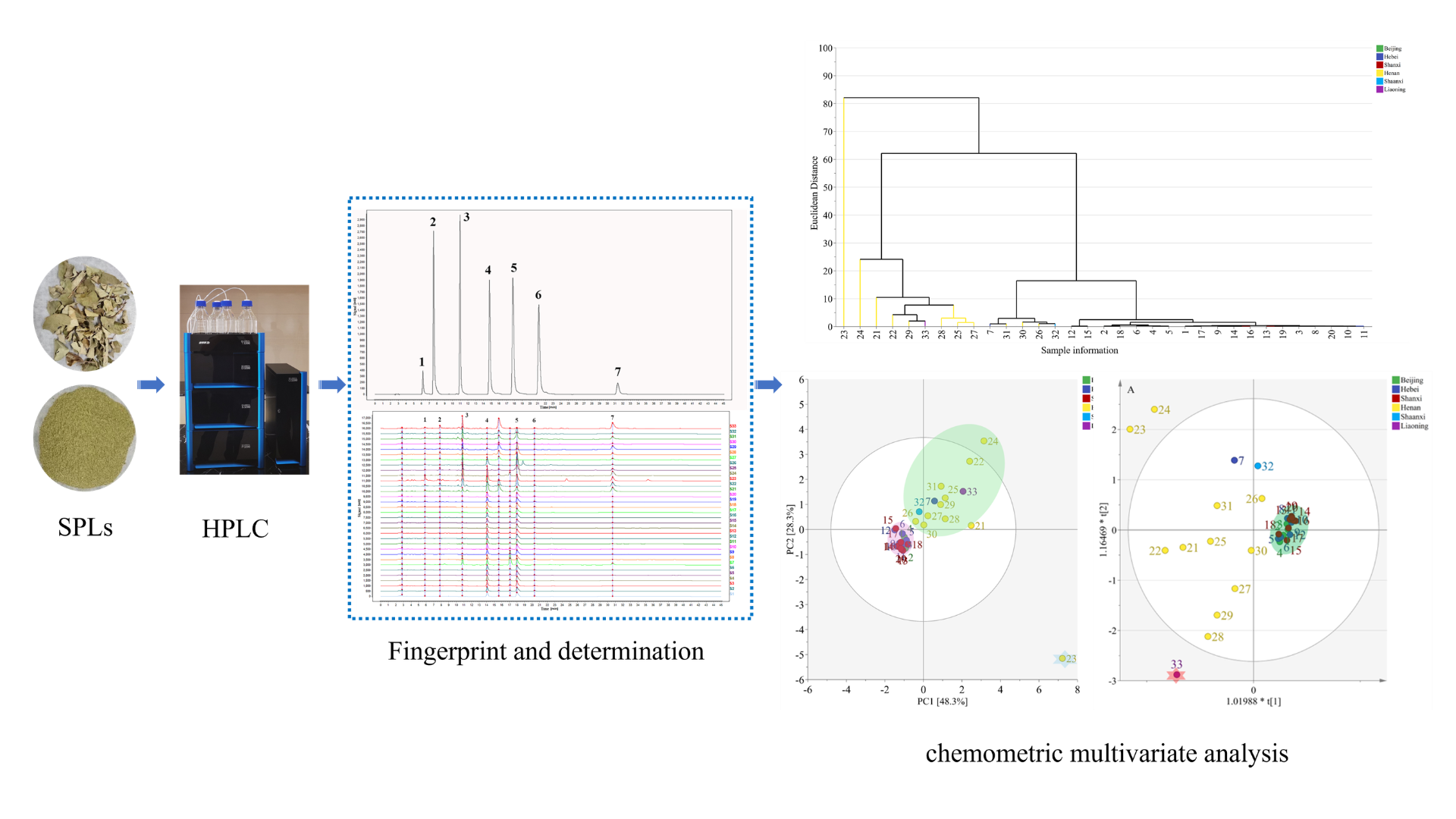
Chemical fingerprinting and simultaneous determination of main compounds combined with multivariate analysis of the Syringa pubescens Turcz. leaves from different origins
Abstract: Background: Syringa pubescens Turcz. is a folk medicinal plant in Henan Province, China and its leaves have been used for medicinal purposes. However, the bioactive compound content varies with geographical origin and quality control methods remain limited. Objectives: This aim is to develop a reliable HPLC method for the simultaneous determination of seven bioactive compounds in S. pubescens leaves from different origins and to evaluate sample differences using chemometric analysis. Methods: Thirty-three batches of leaves from six main regions in China were analyzed using HPLC. Hierarchical cluster analysis (HCA), principal component analysis (PCA) and orthogonal partial least squares discriminant analysis (OPLS-DA) were employed to the quantitative data. Results: All seven components showed good linearity (R² > 0.999). Recovery ranged from 98.23% to 100.12% and RSD values for precision and stability were below 1.84%. The contents of echinacoside, verbascoside and oleuropein were higher than those of other ingredients. HCA and PCA classified the 33 batches into three groups according to their geographical origin. OPLS-DA further differentiated the samples, with oleuropein, echinacoside, verbascoside and syringin identified as major discriminating markers. Conclusion: These findings could support the resource development and utilization and provide a reference for the quality control of SPLs.