★Open Access • Peer-Reviewed • Established 1988

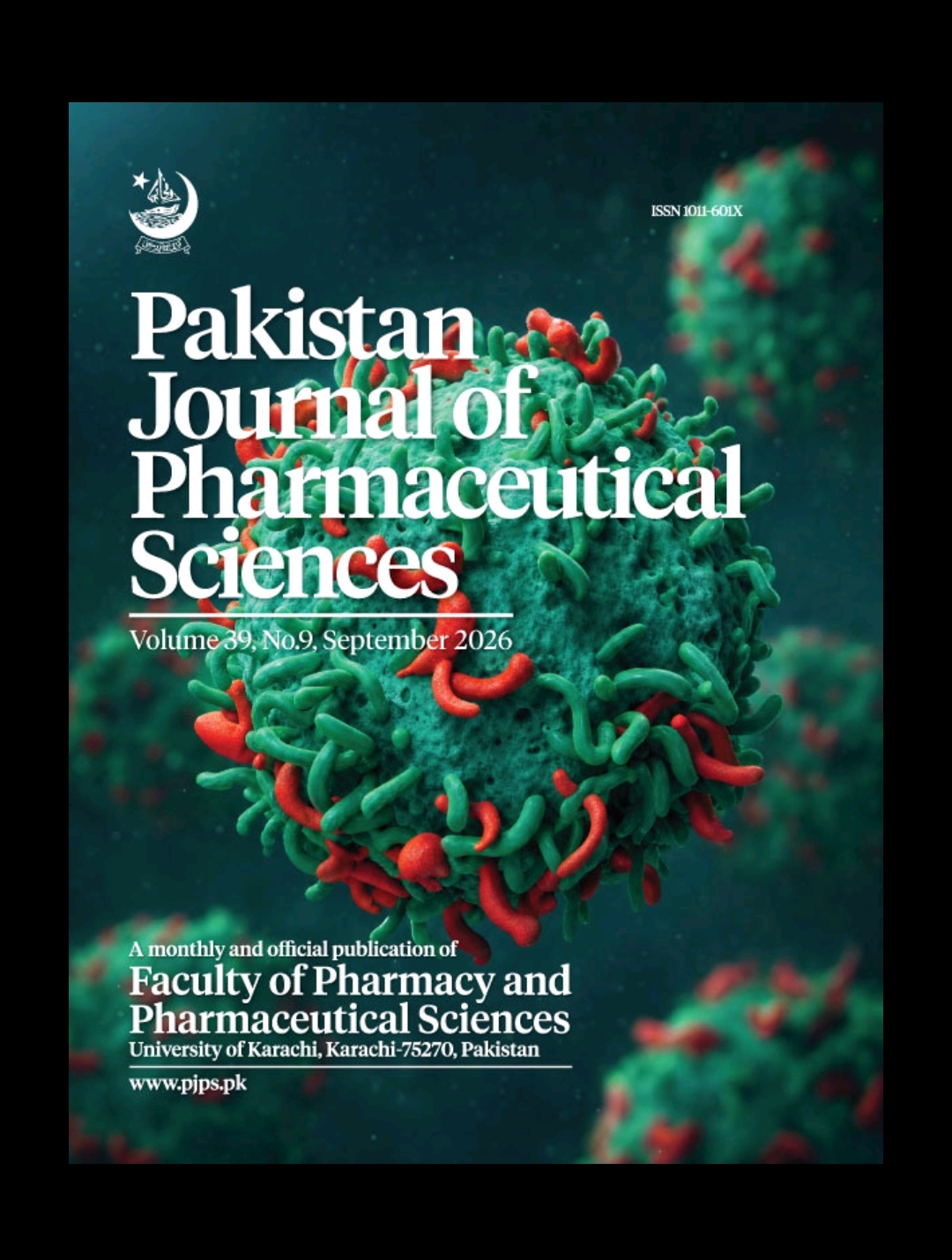
Pakistan Journal of Pharmaceutical Sciences

Pakistan Journal of Pharmaceutical Sciences (PJPS) is an international, peer-reviewed, open-access journal dedicated to publishing high-quality research that advances pharmaceutical, biomedical, and medicinal sciences. Published by the Faculty of Pharmacy and Pharmaceutical Sciences, University of Karachi since 1988, PJPS provides a trusted platform for researchers, academicians, clinicians, and industry professionals worldwide to disseminate innovative discoveries, foster scientific collaboration, and accelerate the translation of research into better healthcare outcomes. We welcome original research, reviews, and emerging innovations that shape the future of pharmaceutical sciences.

Journal Cover 40 Issue 1
0.6
IMPACT FACTOR
Clarivate Analytics
1011-601X/3105-9686
ISSN PRINT / ONLINE
Since 1988
12500+
TOTAL CITATIONS
Google Scholar
6000+
ARTICLES PUBLISHED
Peer-Reviewed
100+
COUNTRIES REACHED
Global Readership

Latest Research Articles

Browse All Articles
original articlesPublished Date:
Volume 40, Issue 2Available Online Date: 26 Oct 2026

Evaluation of stromal tumor-infiltrating lymphocytes and immune checkpoint expression in triple-negative breast cancer treated with neoadjuvant chemotherapy with or without carboplatin

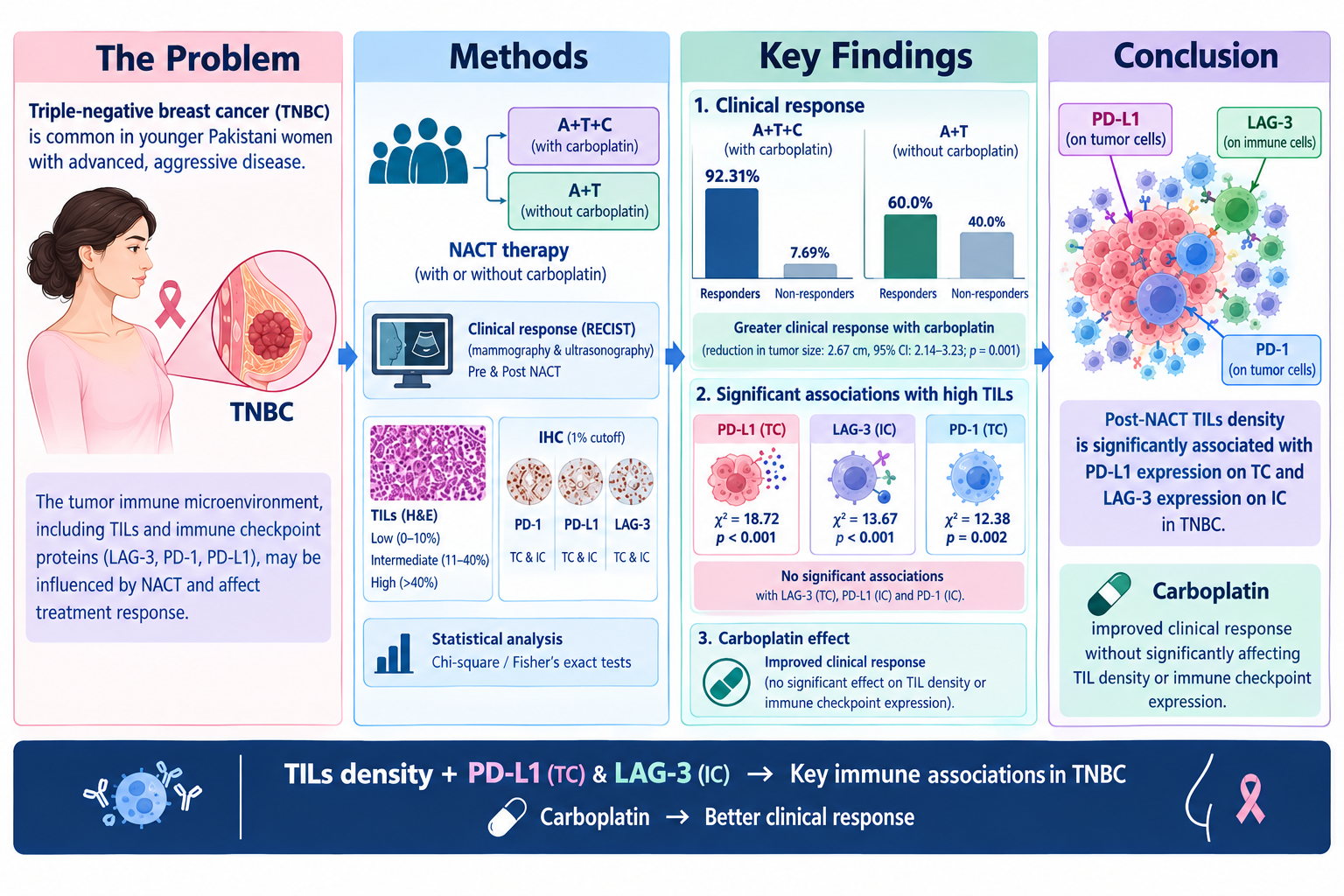
Abstract: Background: Triple-negative breast cancer (TNBC) is predominant among younger Pakistani women with advanced and biologically aggressive disease. Ethnic, genetic and environmental factors, as well as neoadjuvant chemotherapy (NACT), may affect the tumor immune microenvironment, including stromal tumor-infiltrating lymphocytes (TILs), immune checkpoint proteins expression like lymphocyte activation gene-3 (LAG-3), programmed cell death-1 (PD-1) and programmed cell death ligand-1 (PD-L1). Objectives: To investigate the expression of LAG-3, PD-1 and PD-L1 immune checkpoint proteins and evaluate their association with TILs in patients with TNBC receiving NACT with or without carboplatin. Methods: This quasi-experimental study included 54 patients with TNBC aged 24 to 45 years treated at two tertiary care hospitals in Karachi, Pakistan. Thirty-nine patients received anthracycline-taxane-carboplatin therapy (A+T+C group), whereas fifteen received anthracycline-taxane therapy (A+T group). Clinical response was assessed using Response Evaluation Criteria in Solid Tumor (RECIST) based on mammography and breast ultrasonography before and after NACT. TILs were assessed on hematoxylin and eosin-stained (H&E) post-NACT resection sections and categorized as low (0-10%), intermediate (11-40%), or high (>40%) according to international recommendations. Immunohistochemistry was performed for PD-1, PD-L1 and LAG-3 expression in tumor cells (TC) and TILs using compartment-specific proportional scoring with a 1% positivity cutoff. Associations were analyzed using chi-square/Fisher’s exact tests. Results: The A+T+C group attained a higher RECIST-based clinical response rate than the A+T group (92.31% vs. 60.0%) with a reduction in tumor size (2.67 cm, 95% CI: 2.14–3.23; p=0.001). High TILs density was significantly associated with PD-L1 expression on TC (χ² = 18.72; p < 0.001), LAG-3 expression on immune cells (IC) (χ² = 13.67; p < 0.001) and PD-1 expression on TC (χ² =  12.38; p = 0.002). No significant associations were observed with LAG-3 expression on TC, PD-L1 and PD-1 expressions on IC. Conclusion: Post-NACT TILs density was significantly associated with PD-L1 expression on TC and LAG-3 expression on IC in TNBC. Carboplatin improved the clinical response without significantly affecting the TIL density or immune checkpoint expression.
Evaluation
of stromal tumor-infiltrating lymphocytes and immune checkpoint expression in
triple-negative breast cancer treated with neoadjuvant chemotherapy with or
without carboplatin
Page No:643-653
Moazzam Ali Shahid, Shamim Mushtaq, Ghulam HaiderView more
View Abstract
original articlesPublished Date:
Volume 40, Issue 2Available Online Date: 26 Oct 2026

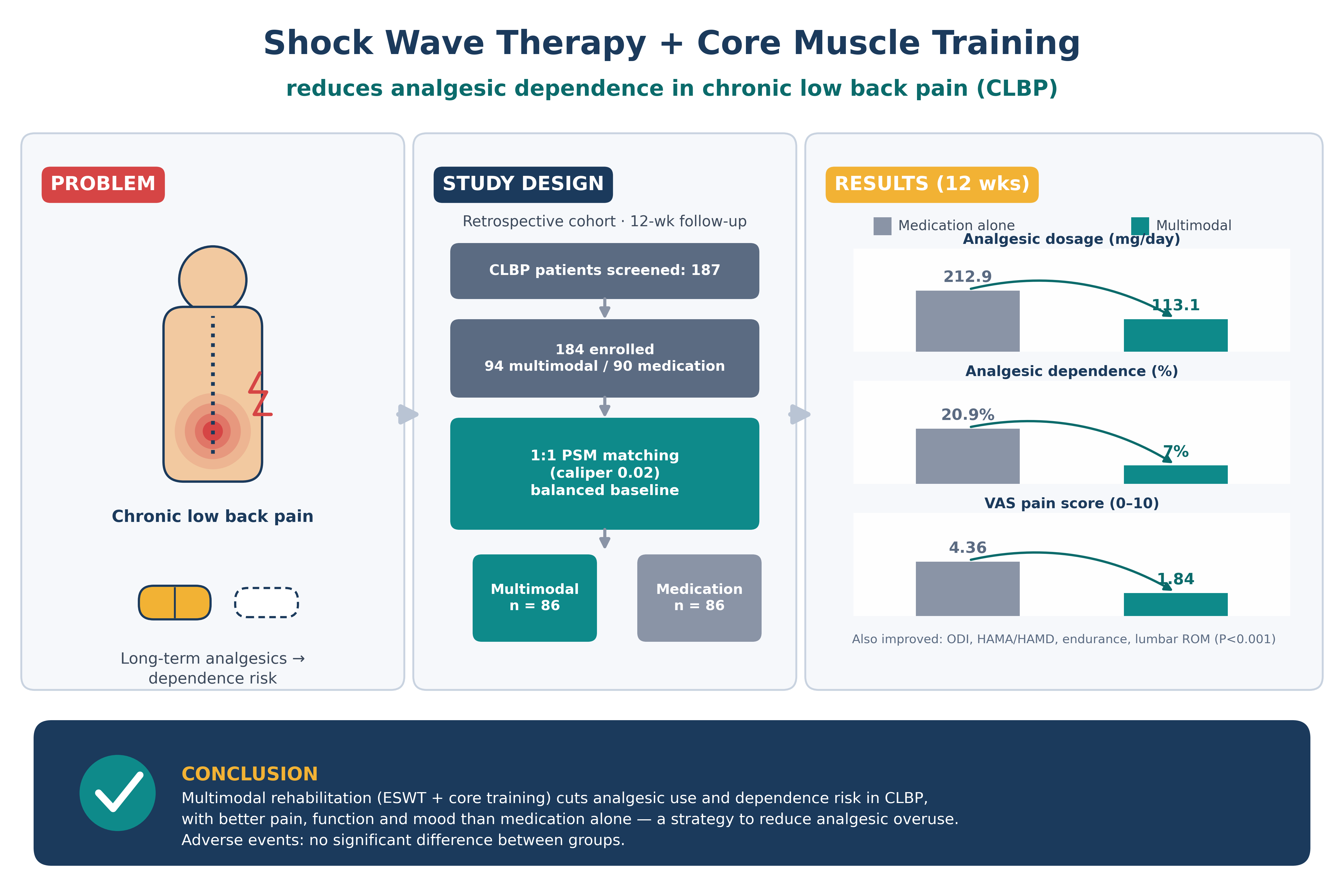
Combination shock wave therapy and core muscle training reduced analgesic dependence in chronic low back pain: A retrospective cohort analysis of multimodal rehabilitation versus pharmacotherapy alone

Abstract: Background: Few studies examine combined shockwave and core training for chronic low back pain (CLBP) analgesic dependence. Objectives: This study compared multimodal rehabilitation (shock wave therapy plus core muscle training) with pharmacotherapy alone for analgesic dependence in CLBP patients. Methods: Clinical data were retrospectively collected from 187 consecutive CLBP patients admitted to Jiangbin Hospital of Guangxi Zhuang Autonomous Region between January 2024 and June 2025. After exclusion, 184 patients were enrolled and divided into a multimodal rehabilitation group (shock wave therapy, core muscle exercises and routine medications; n=94) and a monotherapy group (pharmacotherapy only; n=90). 1:1 propensity score matching (PSM) produced 86 matched cases per group. The primary endpoints were analgesic dosage and the incidence of analgesic dependence. Secondary outcomes included the Visual Analogue Scale (VAS), Oswestry Disability Index (ODI), back extensor endurance, side-bridge holding time, lumbar range of motion, Hamilton Anxiety Rating Scale (HAMA) and Hamilton Depression Rating Scale (HAMD) scores and adverse events. Multivariate logistic regression was performed to identify independent predictors of analgesic dependence in CLBP patients. Results: After PSM, baseline characteristics were balanced between groups (all P > 0.05). At 12-week follow-up, the multimodal rehabilitation group showed lower analgesic dosage and analgesic dependence rate than the medication-only group (both P < 0.05). Both groups showed improvements in VAS, ODI, HAMA, and HAMD scores (all P < 0.05), with the multimodal group showing better outcomes (all P < 0.001). The multimodal group also exhibited greater enhancements in Sorensen test time, side-bridge duration and lumbar range of motion (all P < 0.001). No significant between-group difference in adverse events was observed (P = 0.109). Therapeutic strategy and baseline analgesic dosage were independent predictors of analgesic dependence (all P < 0.05). Conclusion: Multimodal rehabilitation combining shock wave therapy and core muscle training is more effective in reducing analgesic dependence in CLBP patients.

Combination shock wave
therapy and core muscle training reduced analgesic dependence in chronic low
back pain: A retrospective cohort
analysis of multimodal rehabilitation versus pharmacotherapy alone
Page No:630-642
Huiyu Zhang, Feifei Zhou, Shaoping Lin
View Abstract
original articlesPublished Date:
Volume 40, Issue 2Available Online Date: 23 Oct 2026

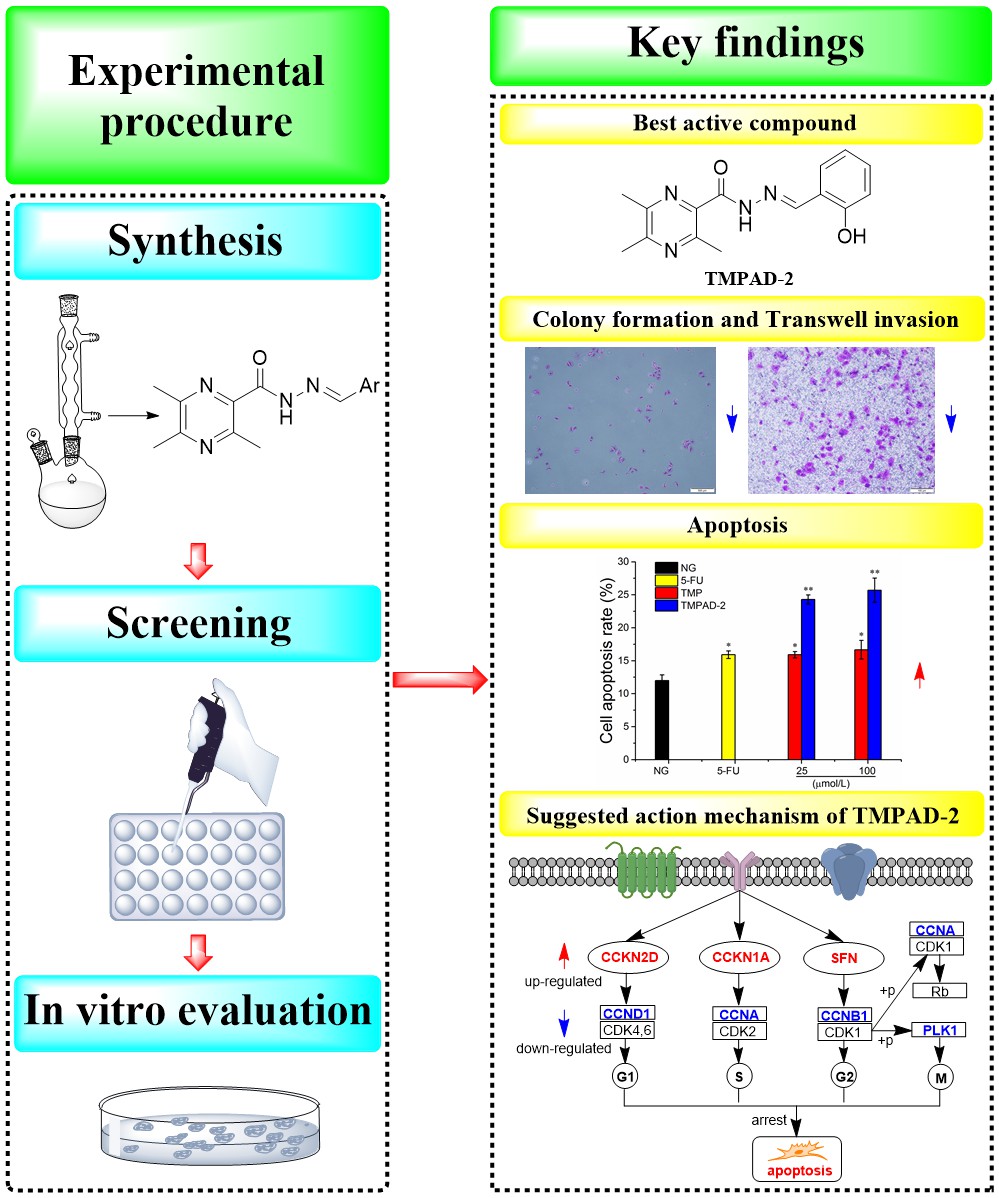
Synthesis and characterization of ligustrazine-acylhydrazone derivatives and their inhibitory activity against human lung cancer A549 cells

Abstract: Background: Ligustrazine is a pivotal active component of Ligusticum wallichii Franch; it is used clinically for treating cardiovascular diseases. Derivatization of ligustrazine might promote its biological activities and bioavailability. Objectives: A series of ligustrazine-acylhydrazone derivatives (TMPAD-1–TMPAD-13) were synthesized and their inhibitory activity against A549 cells was investigated. Methods: These derivatives were synthesized by condensing aromatic aldehydes with ligustrazine-based hydrazides to form acylhydrazone bonds and their chemical structures were characterized through a combination of spectral methods, including Fourier transform infrared (FT-IR) spectroscopy, electrospray ionization high resolution mass spectrometry (ESI-HRMS), 1H and 13C nuclear magnetic resonance (NMR) spectra. Results: In-vitro experimental results displayed that TMPAD-2 exhibited marked inhibitory activity against A549 cells as shown by impeding cell proliferation (IC50 = 48.08 μmol/L), colony formation (colony forming efficiency ≤ 1.5 ± 0.02%), invasion and migration, enhancing tumor necrosis factor (TNF)-α and reactive oxygen species (ROS) levels, decreasing interleukin (IL)-6 and mitochondrial membrane potential (MMP) levels, hindering cell cycle progression and inducing apoptosis. RNA-sequencing (RNA-seq) analysis disclosed 17 lung cancer-related differentially expressed genes (DEGs). These results were statistically supported with significant p-value. Conclusion: These results suggest that dysregulation of the cyclin–cyclin-dependent kinase (CDK)–cyclin-dependent kinase inhibitor (CKI) regulatory network is primarily responsible for the inhibitory action of TMPAD-2 on A549 cells. Current findings might provide valuable insights for further development of ligustrazine derivatives as novel anticancer agents.

Synthesis and characterization of
ligustrazine-acylhydrazone derivatives and their inhibitory activity against
human lung cancer A549 cells
Page No:617-629
Ting Wang, Ji-Wen Sheng, Yu-Jie YangView more
View Abstract
original articlesPublished Date:
Volume 40, Issue 2Available Online Date: 22 Oct 2026

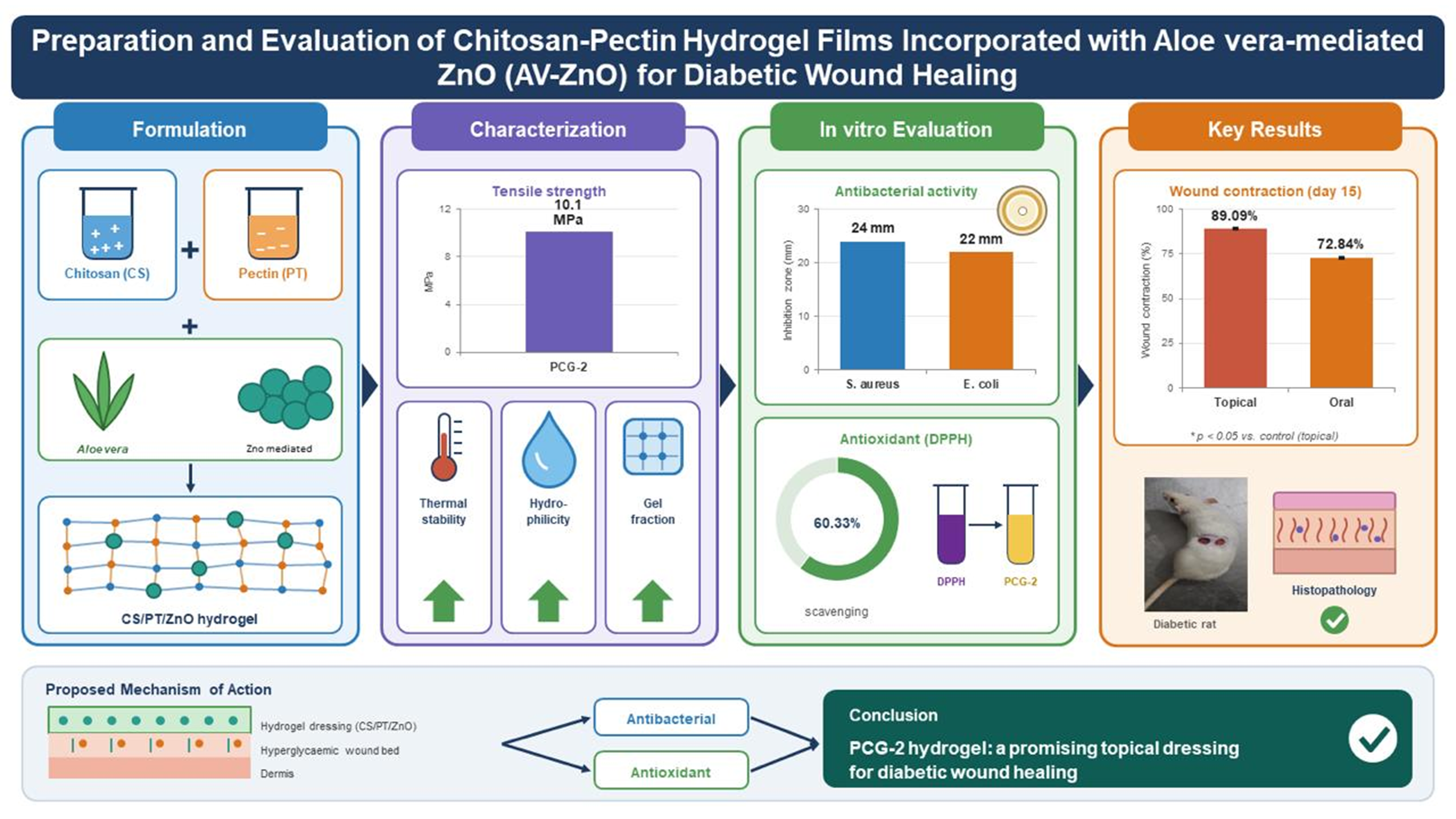
Preparation and evaluation of chitosan-pectin hydrogel films incorporated with Aloe vera-mediated ZnO (AV-ZnO) for diabetic wound healing

Abstract: Background: Diabetic wounds are challenging due to delayed healing, inflammation, oxidative stress and bacterial infections, which conventional dressings often inadequately address. Objectives: To develop and characterize Aloe vera-mediated ZnO-loaded chitosan-pectin composite hydrogel films and evaluate their physicochemical, antibacterial, antioxidant, and in-vivo wound-healing efficacy in streptozotocin-induced diabetic male Wistar rat. Methods: AV-ZnO was synthesized using Aloe vera gel extract and incorporated into CS/PT hydrogels via solution casting to formulate three groups: PC (without AV-ZnO), PCG-1 (10 mg AV-ZnO), and PCG-2 (20 mg AV-ZnO). Physicochemical characterization included FTIR, SEM, AFM, TGA, gel fraction, contact angle, and tensile testing. Antibacterial activity was assessed against Staphylococcus aureus and Escherichia coli via disk diffusion, and antioxidant activity via DPPH radical-scavenging assay. In-vivo wound-healing efficacy was evaluated in streptozotocin-induced diabetic male Wistar rats (N = 24, n = 6/group) across four groups: untreated control, gentamicin-treated control, topical PCG-2, and exploratory oral PCG-2 hydrogel. Results: AV-ZnO incorporation improved tensile strength (10.1 MPa for PCG-2), hydrophilicity, gel fraction, and thermal stability. PCG-2 exhibited the strongest antibacterial activity, with inhibition zones of 28 mm against S. aureus and 20 mm against E. coli, attributed to AV-ZnO (Zn²⁺ release kinetics not evaluated). Antioxidant activity rose concentration-dependently, with PCG-2 showing 60.33% radical scavenging at 0.6 mg/mL. In-vivo, topical PCG-2 showed the highest wound contraction (89.09% ± 0.61 %, p < 0.05 vs. control) by day 15, surpassing exploratory oral treatment (72.84% ± 0.65%) and gentamicin (topical treated group) (83.77% ± 0.25%). Histology indicate improved re-epithelialization and collagen organization with topical treatment versus controls.

Preparation and evaluation of chitosan-pectin hydrogel films incorporated
with Aloe vera-mediated ZnO (AV-ZnO) for diabetic
wound healing
Page No:597-616
Shirin Gull, Huma Umbreen, Mahr un NisaView more
View Abstract
original articlesPublished Date:
Volume 40, Issue 2Available Online Date: 20 Oct 2026

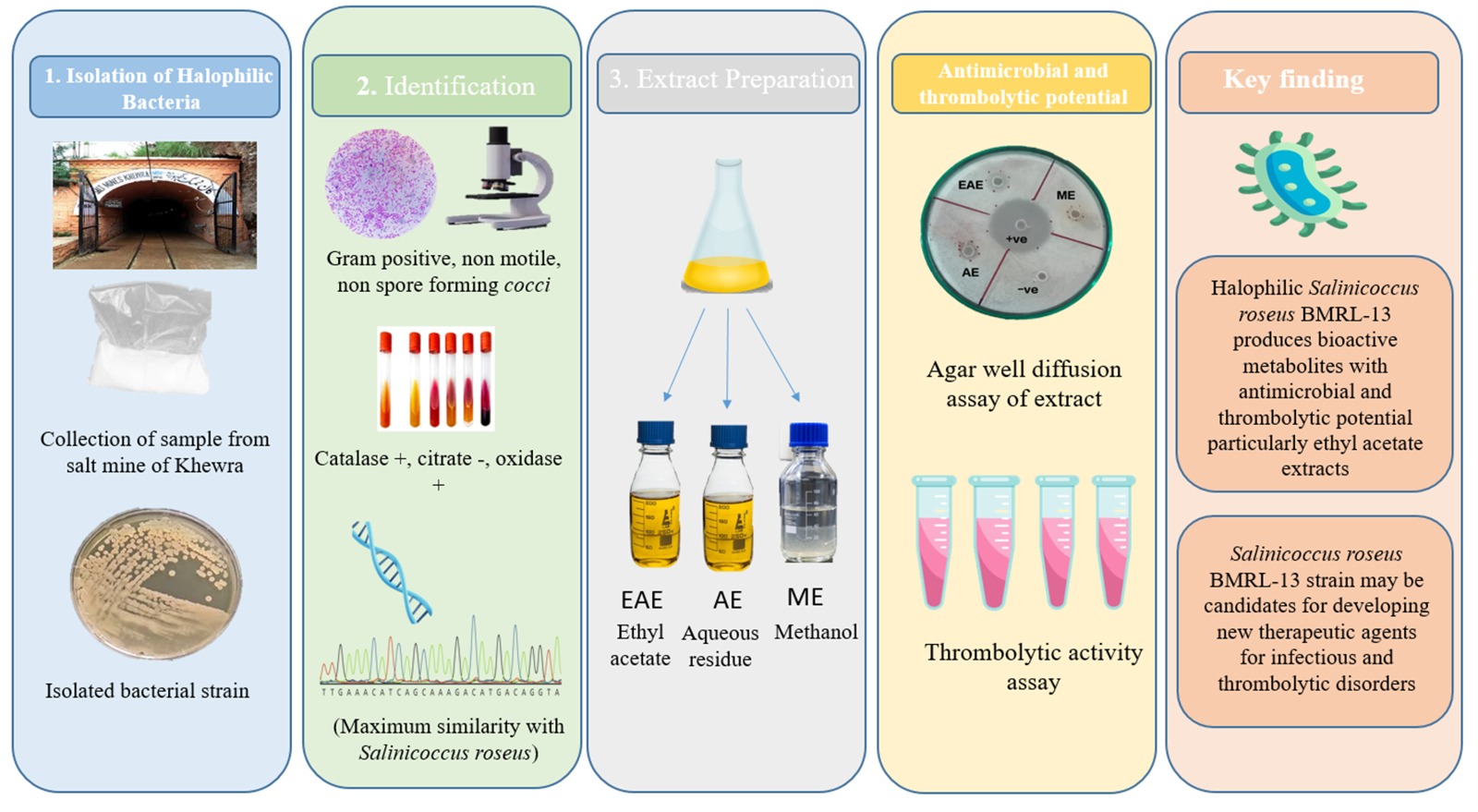
Isolation, identification and characterization of halophilic Salinicoccus roseus BMRL-13 and evaluation of its antimicrobial and thrombolytic potential

Background: Halophilic microorganisms thriving in high-saline environments are recognized as a significant source of novel bioactive metabolites. The rise in antimicrobial resistance and the increasing burden of cardiovascular diseases cause health challenges worldwide. Commercially available antimicrobial and thrombolytic drugs have many side effects and high costs. Objectives: To explore halophilic bacteria as a source of bioactive compounds with thrombolytic and antimicrobial potential. Methods: Halophilic Gram-positive bacteria isolated from the salt mine of Khewra, Punjab, Pakistan, were characterized morphologically and biochemically and molecular identification was performed by 16S ribosomal RNA gene sequencing. Antimicrobial activities of extracts were checked against pathogenic bacteria, including Staphylococcus aureus, Bacillus subtilis, Pasteurella multocida and Escherichia coli, as well as Aspergillus niger. The thrombolytic potential of extracts was also investigated. Results: Bacteria showed maximum homology with Salinicoccus roseus strain. The sequence was submitted to GenBank (accession number PQ636913). Bacterial extracts were prepared using methanol (ME), ethyl acetate (EAE) and aqueous layer (AE). EAE showed the highest antibacterial activity against P. multocida with a zone of inhibition (ZOI) of 24.06 ± 0.35 mm. However, ME exhibited the highest antibacterial activity against E. coli (19.20 ± 0.36 mm), S. aureus (16.06 ± 0.25 mm) and B. subtilis (13.46 ± 0.35 mm). No antifungal activity was observed for any extract. Thrombolytic potential was also assessed and EAE (33.72% ± 1.94) represented the highest thrombolytic activity, followed by AE (25% ± 0.81) and ME (16% ± 1.75). Cytotoxicity of extracts was analyzed; EAE exhibited maximum hemolysis of 11.81% ± 0.41. Conclusion: The results suggest that bioactive metabolites from the halophilic bacterium Salinicoccus roseus BMRL-13 strain may be candidates for developing new therapeutic agents for infectious and thrombolytic disorders. All the experiments were carried out in triplicate and results were presented as the mean with standard deviation.

Isolation, identification and characterization
of halophilic Salinicoccus roseus
BMRL-13 and evaluation of its antimicrobial and thrombolytic potential
Page No:583-596
Ayesha Sana, Zahid Mushtaq, Muhammad ShahidView more
View Abstract

Browse by Topic

Research Scope & Subjects

Editorial Leadership

View Former Editors-in-Chief

Prof. Dr. Harris Shoaib

Editor-in-Chief

Faculty of Pharmacy and Pharmaceutical Sciences, University of Karachi, Karachi, Pakistan.

Specializing in Pharmacognosy and Natural Products Research, with over three decades of contribution to global pharmaceutical sciences.

2020 — PRESENT

Indexed & Abstracted in Leading Databases