★Open Access • Peer-Reviewed • Established 1988

Pakistan Journal of Pharmaceutical Sciences

Pakistan Journal of Pharmaceutical Sciences (PJPS) is an international, peer-reviewed, open-access journal dedicated to publishing high-quality research that advances pharmaceutical, biomedical, and medicinal sciences. Published by the Faculty of Pharmacy and Pharmaceutical Sciences, University of Karachi since 1988, PJPS provides a trusted platform for researchers, academicians, clinicians, and industry professionals worldwide to disseminate innovative discoveries, foster scientific collaboration, and accelerate the translation of research into better healthcare outcomes. We welcome original research, reviews, and emerging innovations that shape the future of pharmaceutical sciences.

Journal Cover 39 Issue 12
0.6
IMPACT FACTOR
Clarivate Analytics
1011-601X/3105-9686
ISSN PRINT / ONLINE
Since 1988
12500+
TOTAL CITATIONS
Google Scholar
6000+
ARTICLES PUBLISHED
Peer-Reviewed
100+
COUNTRIES REACHED
Global Readership

Latest Research Articles

Browse All Articles
original articlesPublished:
Volume 40, Issue 1

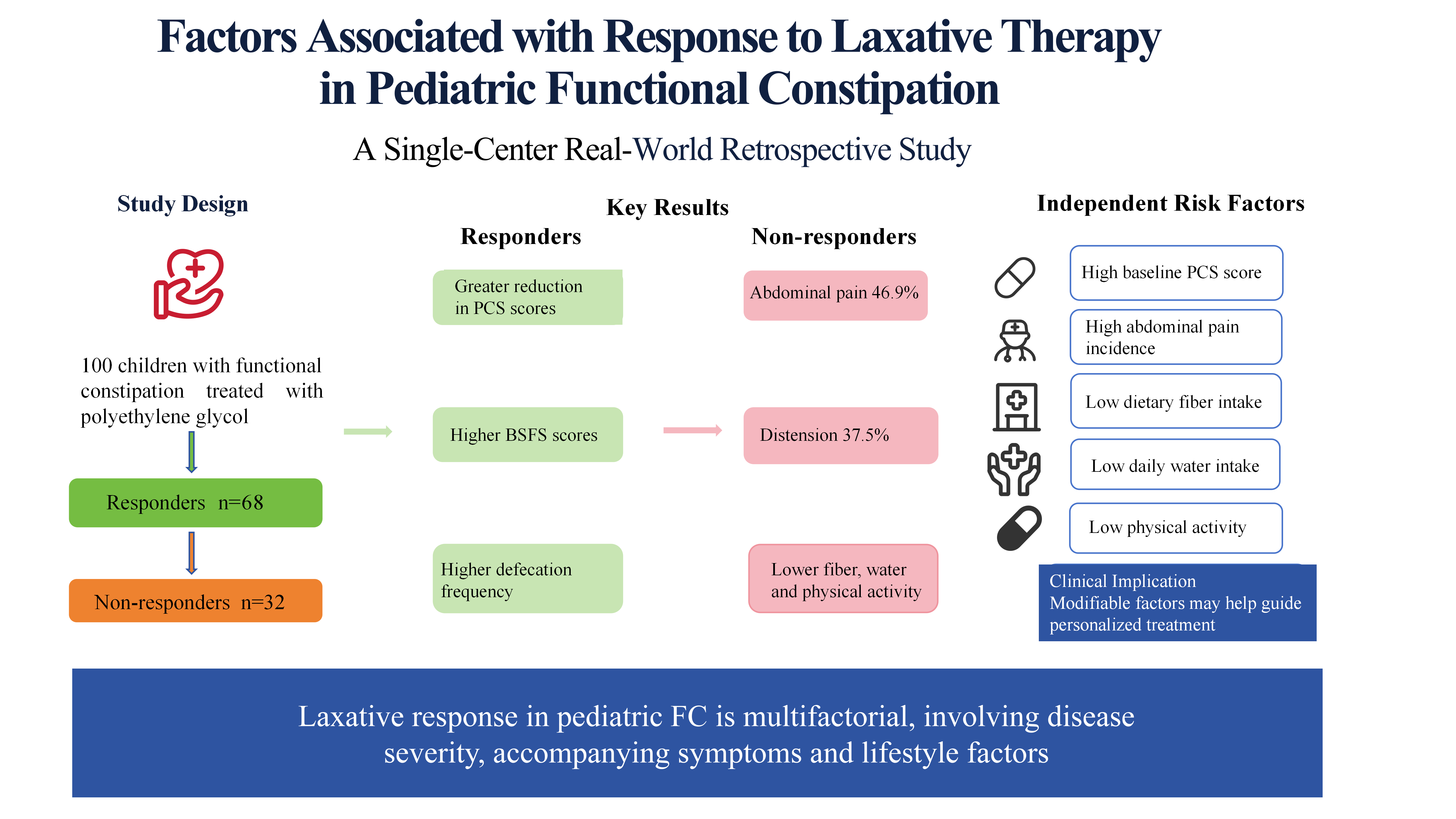
Factors associated with treatment response to laxative therapy in pediatric functional constipation: A real-world retrospective study

Abstract: Background: Laxatives are the mainstay for pediatric functional constipation (FC), yet response factors need more real-world research. Objectives: This study investigated factors associated with laxative treatment response in children with functional constipation. Methods: Retrospective data were screened from 103 pediatric FC patients receiving polyethylene glycol treatment (The First Hospital of Qinhuangdao, Feb 2023–Nov 2025). After exclusion, 100 cases were included and divided into the responder group (n=68) and the non-responder group (n=32). The primary outcome measures included the Pediatric Constipation Score (PCS), the Bristol Fecal Morphology Scale (BSFS) and defecation frequency. Secondary endpoints included the incidence of abdominal pain, incidence of bloating, average daily dietary fiber intake, average daily water intake and average daily physical activity. A logistic regression analysis was conducted to identify independent risk factors associated with treatment response. Results: The baseline clinical characteristics of both groups were well-balanced (all P > 0.05). Post-treatment evaluation showed that the PCS score in the responder group decreased more significantly compared to the non-responder group (P<0.001). Meanwhile, increases in bowel movement frequency and BSFS scores were more pronounced in the responder cohort (all P<0.001). Compared to the non-responder group, the responder group also had lower incidences of abdominal pain and distension (all P<0.05). In terms of lifestyle-related indicators, the responder group had significantly higher daily average dietary fiber intake, average daily water intake and average daily physical activity levels (all P<0.001). Results from logistic regression analysis indicated that high baseline PCS scores, elevated incidence of abdominal pain, insufficient dietary fiber intake, low daily water intake and inadequate physical activity emerged as independent risk factors for poor laxative response in pediatric FC patients (all P<0.05). Conclusion: Laxative response in pediatric FC is affected by several factors, such as severe constipation, poor diet, low activity and abdominal pain.
Factors associated with
treatment response to laxative therapy in pediatric functional constipation: A
real-world retrospective study
Page No:274-284
Feng He, Li Liu, Liyuan QuanView more
View Abstract
original articlesPublished:
Volume 40, Issue 1

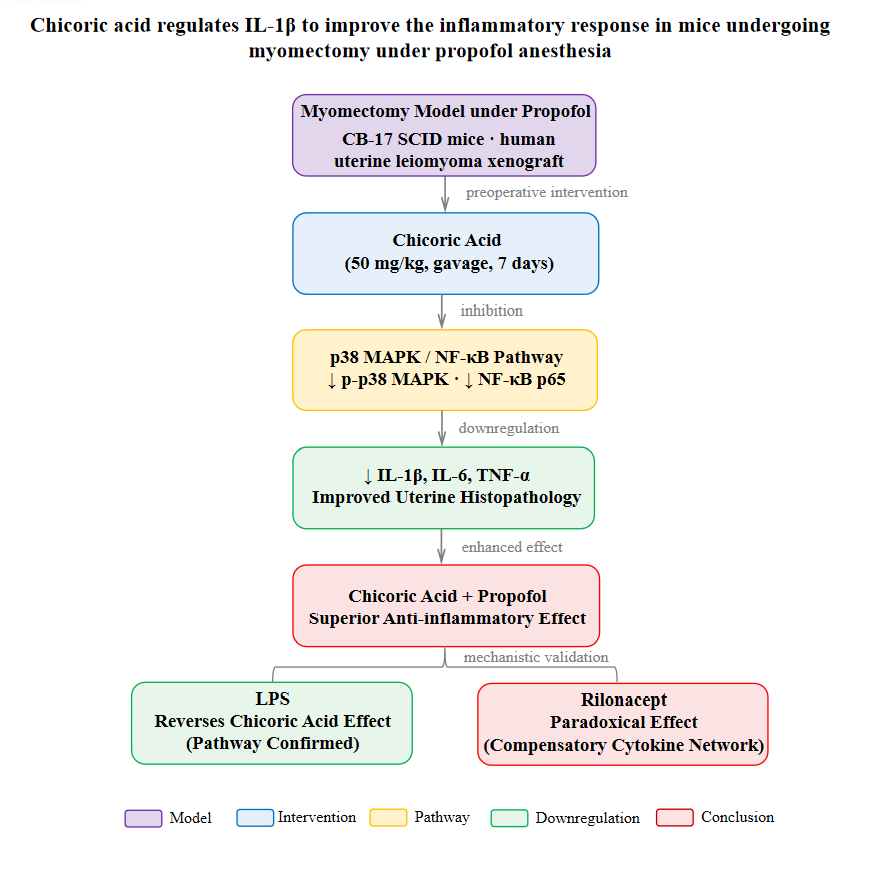
Chicoric acid regulates IL-1β to improve the inflammatory response in mice undergoing myomectomy under propofol anesthesia

Abstract: Background: Surgical excision of uterine fibroids triggers acute inflammation, impacting postoperative recovery. Propofol anesthesia may modulate this response. Chicoric acid possesses anti-inflammatory properties, but its perioperative utility remains unexplored. Objectives: To investigate whether preoperative chicoric acid enhances the anti-inflammatory effect of propofol in a mouse model of myomectomy and to explore the involvement of the p38 MAPK/NF-κB/IL-1β axis. Methods: A human uterine fibroid xenograft mouse model was established using CB-17 SCID mice. Mice underwent simulated myomectomy under propofol or ketamine anesthesia, with or without preoperative chicoric acid (50 mg/kg, 7 days). Controls included sham and model groups. The p38 MAPK/NF-κB agonist LPS and the IL-1β blocker Rilonacept were used to probe mechanisms. Inflammatory cytokines (MSD), pathway protein expression (Western blot), and uterine histopathology (H&E) were assessed 12h post-surgery. Results: Propofol anesthesia significantly inhibited surgery-induced p38 MAPK/NF-κB activation and reduced levels of inflammatory cytokines compared with the model group. Preoperative cholic acid further suppressed this pathway and enhanced the anti-inflammatory effect beyond that of propofol alone. LPS reversed chicoric acid's effects, confirming the involvement of the pathway. Unexpectedly, Rilonacept did not enhance but rather reversed the anti-inflammatory effect of chicoric acid, suggesting complex, compensatory interactions within a cytokine network. Conclusion: Preoperative chicoric acid augments propofol's anti-inflammatory effect during myomectomy by inhibiting the p38 MAPK/NF-κB pathway. However, the paradoxical effect of IL-1β blockade reveals unforeseen complexity in the perioperative cytokine network, warranting further investigation into the multitarget effects of chicoric acid and potential network-compensation mechanisms.

Chicoric acid regulates IL-1β to improve the
inflammatory response in mice undergoing myomectomy under propofol anesthesia
Page No:260-273
Zixuan Zhai, Zheng Zhao, Jianfeng Yu
View Abstract
original articlesPublished:
Volume 40, Issue 1

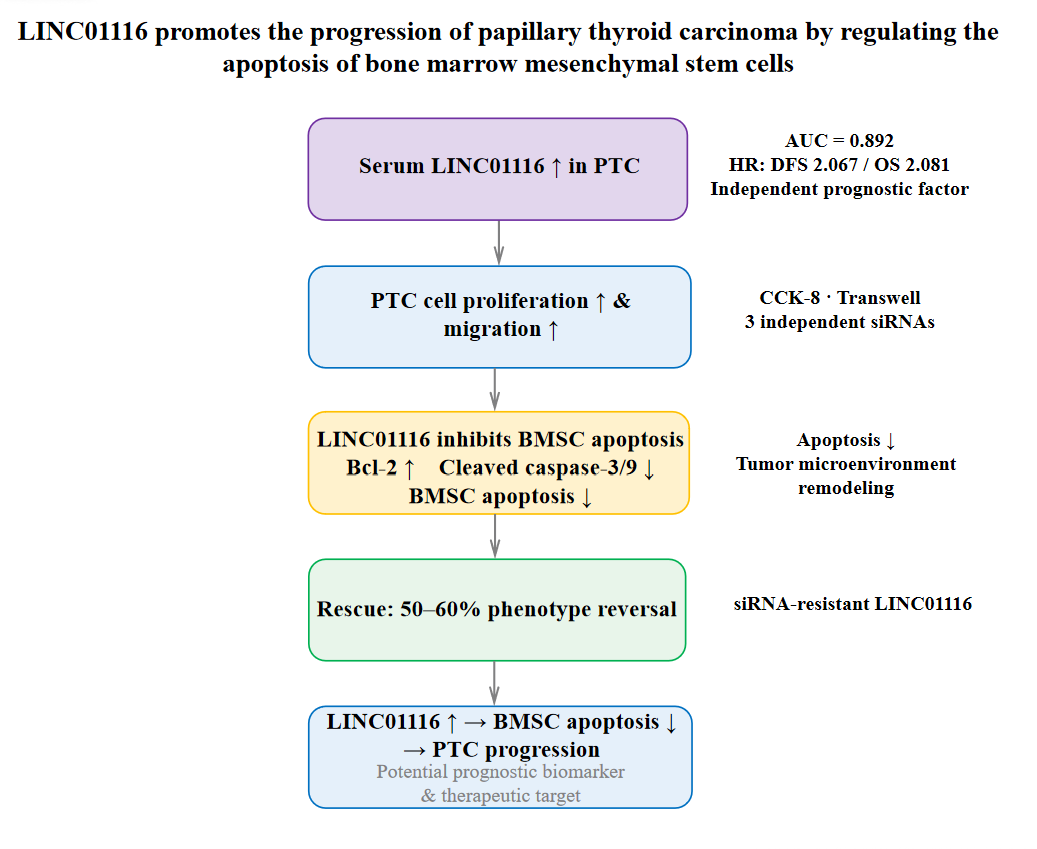
LINC01116 promotes the progression of papillary thyroid carcinoma by regulating the apoptosis of bone marrow mesenchymal stem cells

Abstract: Background: Papillary thyroid carcinoma (PTC) is a common endocrine malignancy with rising incidence. The role of LINC01116 in PTC progression and its underlying mechanisms remain unclear. Objectives: To investigate LINC01116 expression in PTC, evaluate its prognostic significance and explore its functional role in regulating bone marrow mesenchymal stem cell (BMSC) apoptosis. Methods: This was a cross-sectional observational study with a prognostic cohort component.Serum samples from 60 PTC patients and 30 healthy controls were analyzed by RT-qPCR. Prognostic value was assessed using Kaplan-Meier survival analysis and Cox regression. In vitro, LINC01116 expression was manipulated in PTC cells and BMSCs using three independent siRNAs and pcDNA3.1 overexpression plasmids. Cell proliferation was evaluated by CCK-8 and colony formation assays, migration by Transwell assays and apoptosis by flow cytometry and Western blot analysis of Bcl-2, cleaved caspase-3 and cleaved caspase-9. Rescue experiments using siRNA-resistant LINC01116 were performed to confirm specificity. Results: LINC01116 was significantly upregulated in serum from PTC patients compared with healthy controls (P < 0.001). High LINC01116 expression correlated with advanced TNM stage and predicted reduced disease-free survival (HR=2.067, P=0.026) and overall survival (HR=2.081, P=0.024), serving as an independent prognostic factor. Knockdown of LINC01116 inhibited PTC cell proliferation and migration, while overexpression enhanced these effects. Mechanistically, LINC01116 suppressed BMSC apoptosis by upregulating Bcl-2 and downregulating cleaved caspase-3/9. Knockdown of LINC01116 induced opposite effects. Rescue experiments confirmed that restoring LINC01116 expression partially reversed knockdown-induced phenotypes (50-60% reversal), demonstrating functional specificity. Conclusion: LINC01116 is significantly upregulated in PTC and serves as an independent prognostic biomarker. It promotes tumor progression by inhibiting BMSC apoptosis through modulation of the Bcl-2/caspase pathway. These findings provide new insights into PTC pathogenesis and suggest LINC01116 as a potential therapeutic target.

LINC01116 promotes the progression of papillary
thyroid carcinoma by regulating the apoptosis of bone marrow mesenchymal stem
cells
Page No:245-259
Huan He, Kehao Liu
View Abstract
original articlesPublished:
Volume 40, Issue 1

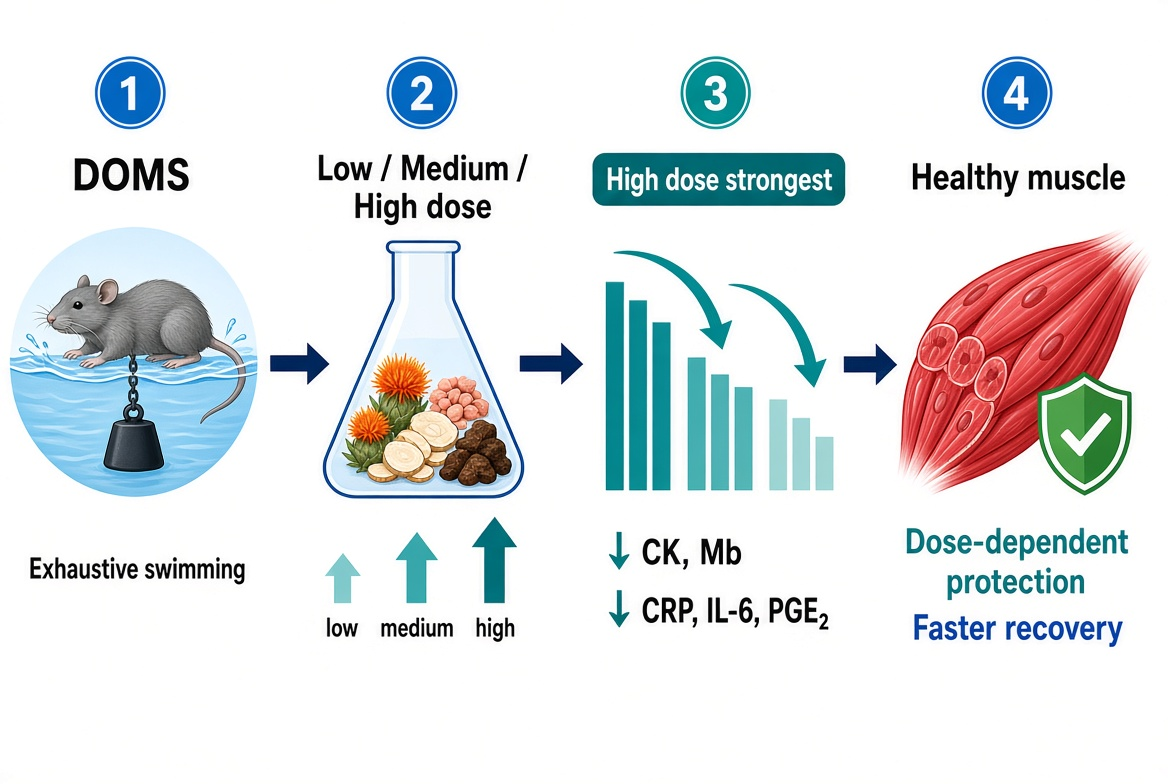
Evaluation of a four-herb Chinese medicine formula at different concentrations on muscle damage and inflammation in a rat model of DOMS

Abstract: Background: Delayed onset muscle soreness (DOMS) impairs exercise recovery, while current treatments remain limited. Traditional Chinese Medicine (TCM) formulas may provide safe, multi-target interventions. Objectives: This study evaluated the dose-dependent protective effects of a four-herb Chinese medicine formulation (safflower, Chinese Angelica, peach kernel and myrrh) against DOMS in a rat model. Methods: Thirty-two male SPF SD rats were randomly allocated to control or low- (1696 mg/kg), medium- (3392 mg/kg), or high-dose (6784 mg/kg) groups. The formulation was administered orally for 11 days, with DOMS induced by exhaustive swimming on day 8. Serum CK, Mb, CRP, IL-6, and PGE₂ were measured at baseline and at 24, 48, 72, and 96 h post-exercise. Results: The medium- and high-dose groups exhibited significantly lower serum CK, Mb, CRP, IL-6, and PGE₂ levels than controls, with the high-dose group showing the largest reductions. The low-dose group showed limited or no significant reductions in most markers, demonstrating a clear dose-dependent protective effect. Conclusions: The formulation dose-dependently attenuates muscle damage and inflammation in a rat DOMS model, with high-dose treatment achieving the fastest recovery. Clinical trials are warranted to confirm the efficacy and safety in humans.

Evaluation of a four-herb Chinese medicine
formula at different concentrations on muscle damage and inflammation in a rat model of
DOMS
Page No:233-244
Yejun Zhan, Changmo Cho
View Abstract
original articlesPublished:
Volume 40, Issue 1

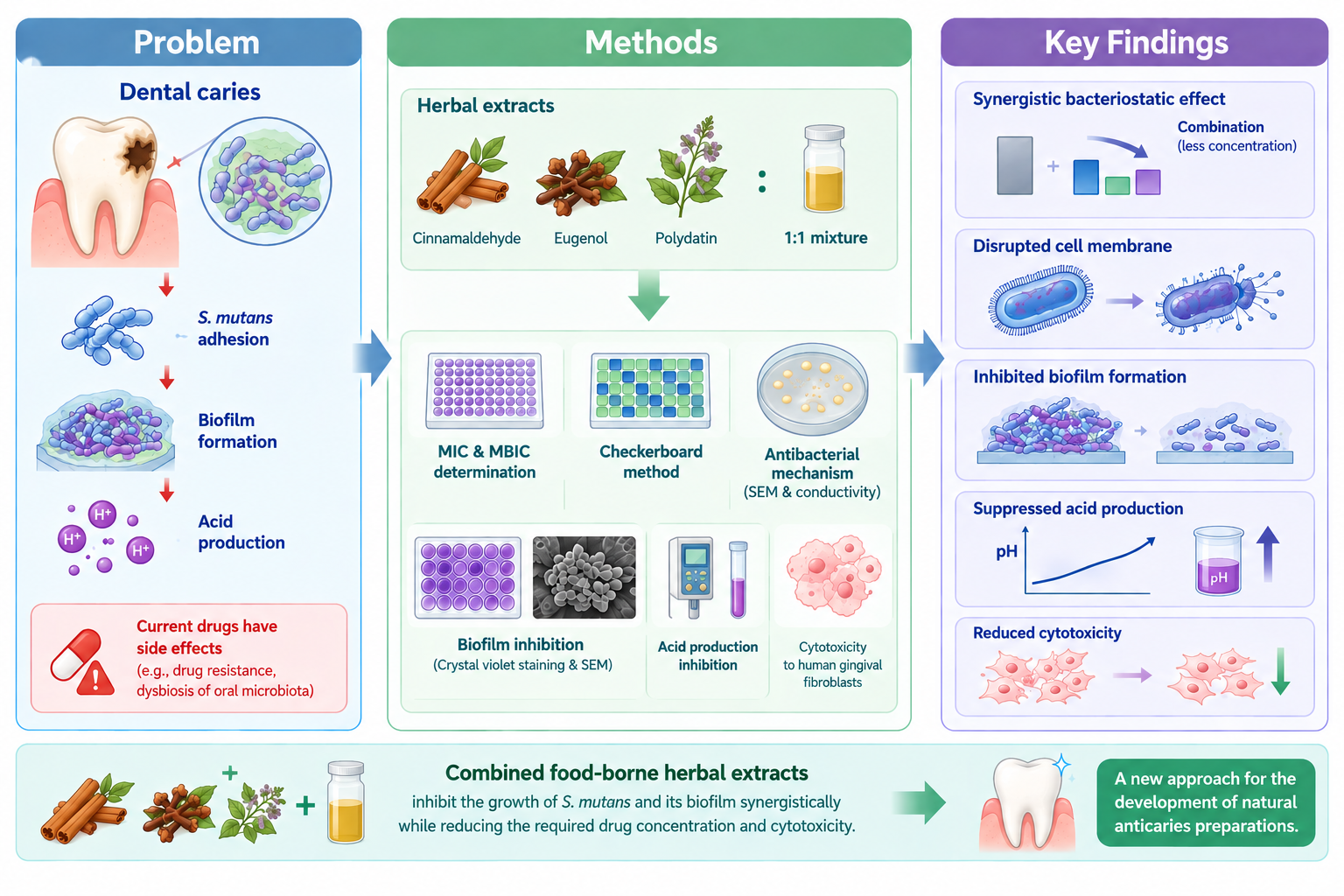
In-vitro study on the effect of cinnamaldehyde, eugenol and polydatin on the growth of Streptococcus mutans and the formation of dental plaque biofilms

Abstract: Background: Dental caries are chronic infectious diseases with a high global prevalence. Its pathogenesis is closely related to the adhesion of Streptococcus mutans (S. mutans), formation of dental plaque biofilms and acid production. Currently, only a few types of anticaries drugs are available for clinical use and the long-term use of these drugs can lead to side effects, such as drug resistance and dysbiosis of the oral microbiota. Objectives: Therefore, exploring new, safe and effective anti-caries treatments is an urgent task. Screening antimicrobial drugs from herbal medicines for non-antibiotic treatment of bacteria could provide new solutions to these problems. This study aimed to screen food-borne herbal extracts with synergistic antimicrobial potential to provide a theoretical foundation for the development of natural anticaries drugs. Methods: This in-vitro study evaluated the minimum inhibitory concentration and minimum biofilm inhibitory concentration of individual plant extracts (cinnamaldehyde, eugenol and polydatin) and a 1:1 mixture of these extracts. The effects of drug combinations were assessed using the checkerboard method. The inhibitory effects of drugs against S. mutans and their antibacterial mechanisms were evaluated through scanning electron microscopy and conductivity measurements. Their ability to inhibit S. mutans biofilms was assessed through crystal violet (Beijing Solebao Technology Co.) staining and scanning electron microscopy. Their inhibition of bacterial acid production and cytotoxicity to human gingival fibroblasts were also examined. Results: The combination groups exhibited synergistic bacteriostatic effects while reducing cytotoxicity. Individual and combined plant extracts exerted bacteriostatic effects by disrupting the bacterial cell membrane, significantly inhibiting S. mutans biofilm formation while suppressing its acid production. Conclusions: The application of combined food-borne herbal extracts inhibits the growth of S. mutans and its biofilm synergistically while reducing the required drug concentration and cytotoxicity. This provides a new approach for the development of natural anticaries preparations.

In-vitro study on the effect of cinnamaldehyde, eugenol
and polydatin on the growth of Streptococcus
mutans and the formation of dental plaque biofilms
Page No:218-232
Tiantian Zhang, Yulong Tan, Xiaoyang ShanView more
View Abstract

Browse by Topic

Research Scope & Subjects

Editorial Leadership

View Former Editors-in-Chief

Prof. Dr. Harris Shoaib

Editor-in-Chief

Faculty of Pharmacy and Pharmaceutical Sciences, University of Karachi, Karachi, Pakistan.

Specializing in Pharmacognosy and Natural Products Research, with over three decades of contribution to global pharmaceutical sciences.

2020 — PRESENT

Indexed & Abstracted in Leading Databases